02 October 2026 | Olkalau, Nyandarua County
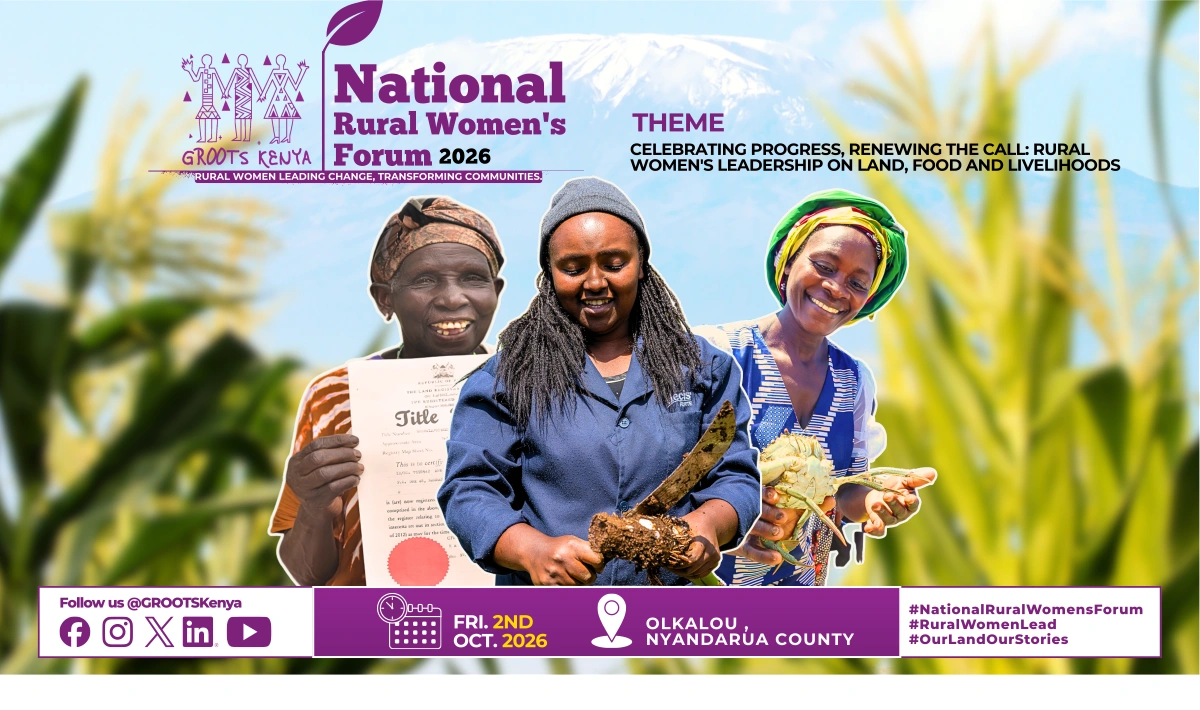
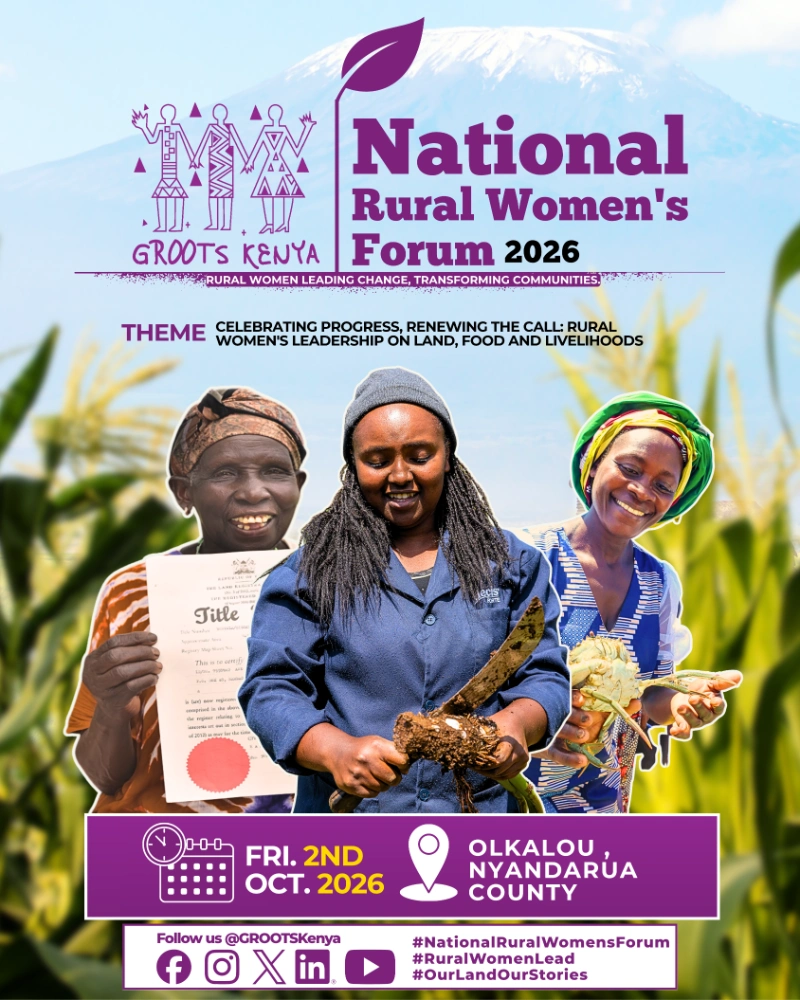
On 2 October 2026, more than 250 grassroots champions, rural women, women farmers, young people, Men for Women Champions, government representatives, partners and other stakeholders from 30 counties across Kenya will come together for the National Rural Women’s Forum 2026 in Olkalau, Nyandarua County.
Convened by GROOTS Kenya, the Forum is a national platform to celebrate rural women's leadership, take stock of progress and renew the call for action on the issues shaping their lives and communities with a focus on land, food and livelihoods.
The day also marks four important moments: The International Day of Rural Women, World Food Day, the International Year of the Woman Farmer and 10 years of the Women to Kilimanjaro Initiative. But this is more than a day of commemoration. It is part of a wider process of bringing grassroots demands from communities into the national conversation.
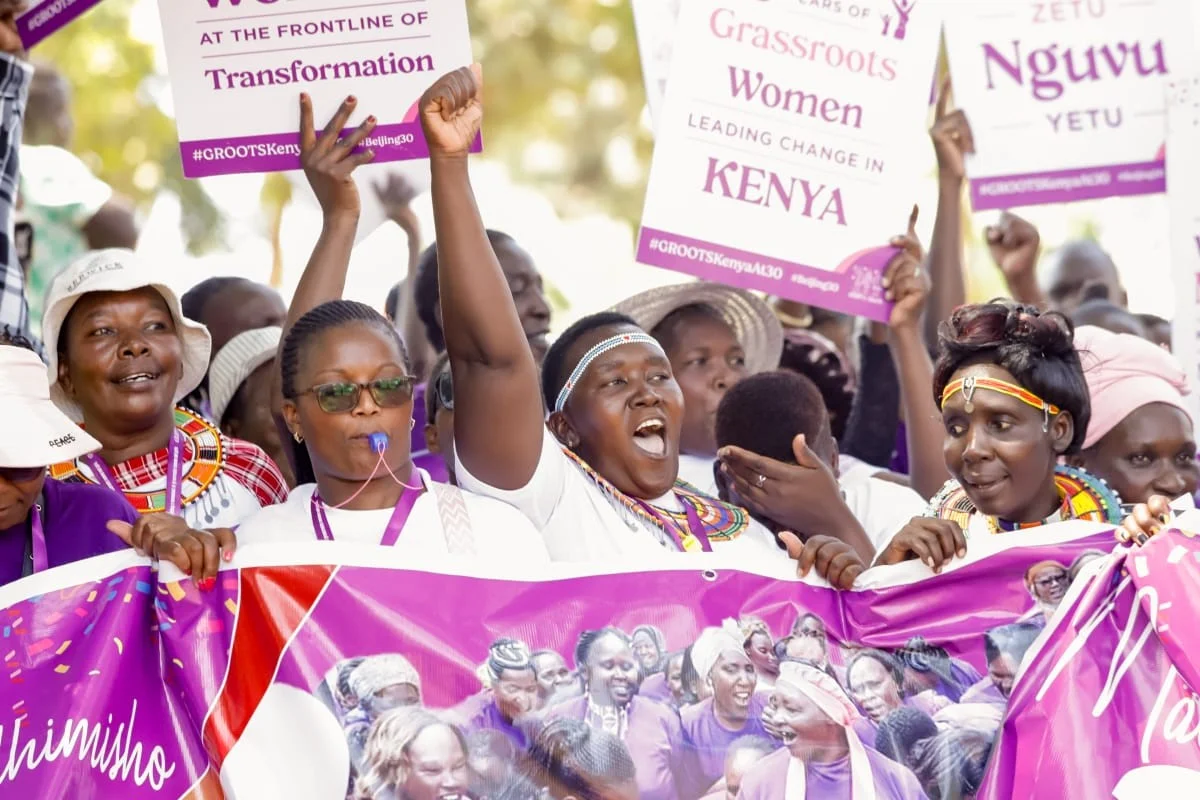
The Forum builds on conversations already taking place across wards, sub-counties and counties, where grassroots women and women farmers have reflected on their experiences, achievements, challenges and demands.
These engagements have generated evidence and recommendations that will feed into the national Forum, keeping the conversations grounded in the realities rural women are already organizing around.
Grassroots women will engage directly with government representatives, civil society organizations, development partners, research institutions and private sector actors bringing community-level experience into national discussions and strengthening rural women's influence over decisions affecting their rights, livelihoods and communities.
The Forum marks 10 years of the Women to Kilimanjaro Initiative, a decade in which rural women have come together to articulate their demands and call for action.
Participants will take stock of progress against the Women to Kilimanjaro Charter of Demands, recognizing what has advanced while identifying the issues that remain outstanding and the emerging priorities that call for renewed collective action.
This reflection matters because progress isn't only measured through policies or commitments. It is also visible in the leadership of women who organize in their communities, influence decisions, build livelihoods, contribute to food systems and advocate for the changes they want to see.
Rural women are farmers, organizers, entrepreneurs, community leaders, environmental stewards, advocates and decision-makers. Their knowledge, labour and leadership are already shaping food systems, local economies and community resilience and the Forum is a chance to bring that leadership to the national table.
The Forum's focus on land, food and livelihoods reflects issues deeply connected to rural women's lives and economic opportunities.
Access to and control over land shapes a woman's ability to farm, invest, build a livelihood and participate in decisions affecting her household and community. Women's knowledge and labour are central to food systems, from production and processing to household food security and community resilience. And access to productive resources and economic opportunities strengthens women's ability to make decisions, support their families and contribute to their communities.
These interconnected issues will anchor the day's discussions alongside conversations on women's participation in decision-making, access to productive resources, sustainable food systems and resilient livelihoods while highlighting the leadership and solutions rural women are already bringing to them.
Celebrating progress also means asking what remains unfinished.
The Forum will bring together recommendations from county-level engagements, giving grassroots women the opportunity to present them directly to stakeholders. From there, the day moves from reflection to dialogue, with stakeholders responding to the issues rural women raise.
The day culminates in a grassroots-led Call to Action, consolidating key demands and setting out clear asks for government and other stakeholders. This will provide a common advocacy agenda for continued engagement at county, national and regional levels, and help carry rural women's demands forward to the 10-year Women to Kilimanjaro convening in Arusha.
The day opens with an exhibition showcasing the work of grassroots women and women farmers, followed by conversations on the progress and evidence emerging from the Women to Kilimanjaro journey.
Grassroots champions and women farmers will share stories of change on food systems and livelihoods, land rights and leadership and influence, alongside stakeholder reflections and discussions on issues emerging from the counties. The program then moves towards commitments and the presentation of the consolidated Call to Action, a clear pathway from grassroots demands to continued advocacy.
The National Rural Women's Forum 2026 is a moment to pause and recognize the progress rural women have made, while being clear about the work that remains.
It is a space to celebrate leadership, bring evidence and lived experience into national conversations, strengthen connections between grassroots women and decision-makers, and renew collective action on land, food and livelihoods. Most importantly, it is about ensuring that rural women's voices and leadership continue to shape the decisions that affect their lives and communities.
Celebrating progress means recognizing how far rural women have come. Renewing the call means carrying their demands forward into the next chapter. On 2 October, rural women, women farmers, young people, allies, government and partners will come together to do both. The journey continues. The call is renewed. And rural women are leading the way.